

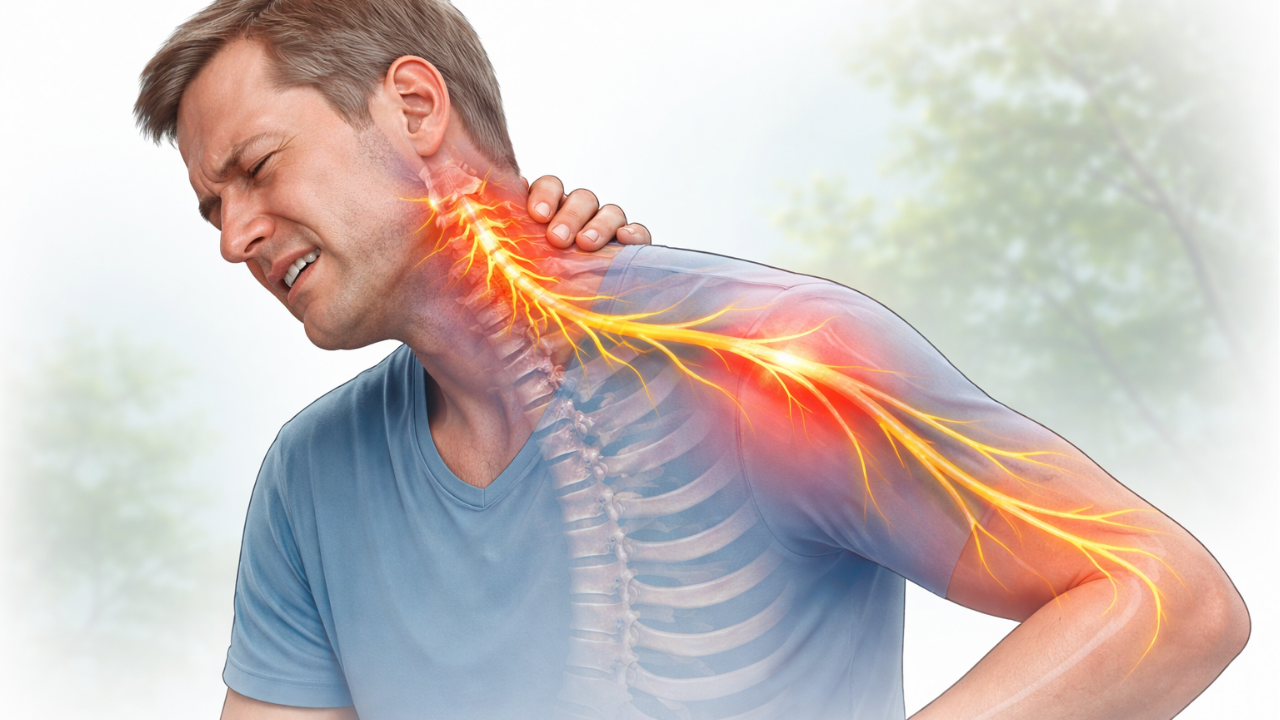
Neck pain is extremely common, especially among people who spend long hours working at a computer, using mobile phones, driving, or maintaining the same posture for extended periods. However, when neck pain begins to travel into the shoulder, arm, or hand and is accompanied by tingling, numbness, or weakness, the problem may involve irritation or compression of a nerve in the neck. This condition is commonly known as cervical radiculopathy.
With appropriate assessment and physiotherapy, many patients can improve their mobility, reduce symptoms, and return to normal daily activities without immediately relying on invasive procedures.
What Is Cervical Radiculopathy?
Cervical radiculopathy occurs when a nerve root in the cervical spine becomes irritated or compressed. The cervical spine contains seven vertebrae that support the head and protect important nerves travelling toward the upper limbs.
A problem involving the discs, joints, or surrounding structures can sometimes place pressure on a nerve root. This may result in symptoms that extend beyond the neck and affect the shoulder, arm, forearm, or hand.
Because symptoms can vary depending on which nerve is affected, a professional assessment is important for determining the appropriate treatment approach.
Common Symptoms of Cervical Radiculopathy
Cervical radiculopathy does not always feel like ordinary neck pain. Some people experience a combination of neck discomfort and symptoms in the upper limb.
Common symptoms may include pain travelling from the neck toward the shoulder or arm, tingling or pins-and-needles sensations, numbness, reduced range of neck movement, and weakness in certain muscles of the arm or hand.
Symptoms may become more noticeable during particular neck movements or prolonged postures. Persistent or worsening symptoms should be assessed by a qualified healthcare professional.
What Causes Nerve Irritation in the Neck?
Several conditions can contribute to cervical nerve irritation. A cervical disc herniation may place pressure on a nerve root, while age-related changes in the spine can contribute to narrowing around the nerves. Joint changes, inflammation, or previous injuries may also play a role.
Poor posture does not necessarily cause every case of cervical radiculopathy, but prolonged positions such as constantly looking downward at a phone or working at an unsuitable desk setup can contribute to neck strain and may aggravate existing symptoms.
Identifying the underlying factors is an important part of creating an effective rehabilitation plan.
How Physiotherapy Can Help
Physiotherapy for cervical radiculopathy begins with a detailed assessment rather than using the same treatment for every patient. A physiotherapist may evaluate neck movement, posture, muscle strength, flexibility, neurological symptoms, and functional limitations.
Depending on the individual’s condition, treatment may include therapeutic exercises, mobility exercises, postural education, manual therapy, strengthening of the neck and upper-body muscles, and advice on modifying activities that aggravate symptoms.
The objective is to improve movement and function while helping the patient manage symptoms safely.
Exercises for Neck and Upper Limb Recovery
A personalized exercise program can play an important role in rehabilitation. Depending on the patient’s assessment, exercises may be used to improve cervical mobility, strengthen supporting muscles, improve shoulder and upper-back function, and gradually restore normal movement.
Exercises should be selected according to the individual’s symptoms and physical condition rather than copied from a general routine. A qualified physiotherapist can guide patients regarding appropriate exercises, repetitions, and progression.
Improving Posture and Daily Habits
Daily habits can have a significant impact on people experiencing neck and arm symptoms. Spending long periods in one position, using a laptop without appropriate support, or repeatedly looking down at a phone can increase strain on the neck.
Physiotherapy may include ergonomic guidance to help patients improve their workstation, sitting position, screen height, and movement breaks. These small adjustments can make daily activities more comfortable and support the rehabilitation process.
When Should You Seek Professional Assessment?
Neck discomfort that persists, repeatedly returns, or begins affecting the arm should not simply be ignored. Professional evaluation is particularly important when symptoms include persistent numbness, noticeable weakness, significant loss of movement, or worsening pain.
Certain symptoms require prompt medical evaluation rather than routine physiotherapy. These can include severe or rapidly progressing weakness, significant problems with walking or coordination, or changes in bladder or bowel function.
A proper assessment helps determine whether physiotherapy is appropriate or whether further medical investigation is needed.
Why Individualized Rehabilitation Matters
Cervical radiculopathy can affect different people in different ways. One patient may mainly experience neck and shoulder pain, while another may have significant arm tingling or weakness.
For this reason, rehabilitation should be based on the individual’s symptoms, assessment findings, activity level, and recovery goals. Regular progress assessments also allow the treatment plan to be modified as symptoms improve.
The goal is to help patients regain comfortable movement and functional independence while giving them the knowledge and exercises needed to manage their condition in the long term.
Take the First Step Toward Better Neck and Arm Function
Persistent neck pain that travels into the arm can interfere with work, sleep, exercise, and everyday activities. Early professional assessment can help identify the possible source of symptoms and determine an appropriate treatment strategy.
With personalized physiotherapy, appropriate exercises, posture education, and consistent rehabilitation, many patients can work toward improved mobility and better daily function.
If you are experiencing persistent neck pain, arm discomfort, tingling, or movement limitations, consider getting a professional assessment rather than continuing to ignore the symptoms.
Spire Medical & Rehabilitation Center
Spire Medical & Rehabilitation Center provides physiotherapy and rehabilitation services for patients experiencing musculoskeletal, neurological, sports-related, and functional conditions.
Address: 5, Block F, Media Town, Islamabad
Phone: 0330 2592597
Our rehabilitation services include Physiotherapy, Manual Therapy, Dry Needling, Electrotherapy, Sports Injury Rehabilitation, Neurological Rehabilitation, Post-Surgical Rehabilitation, Pediatric Physiotherapy, Posture Assessment, and personalized rehabilitation programs.

