


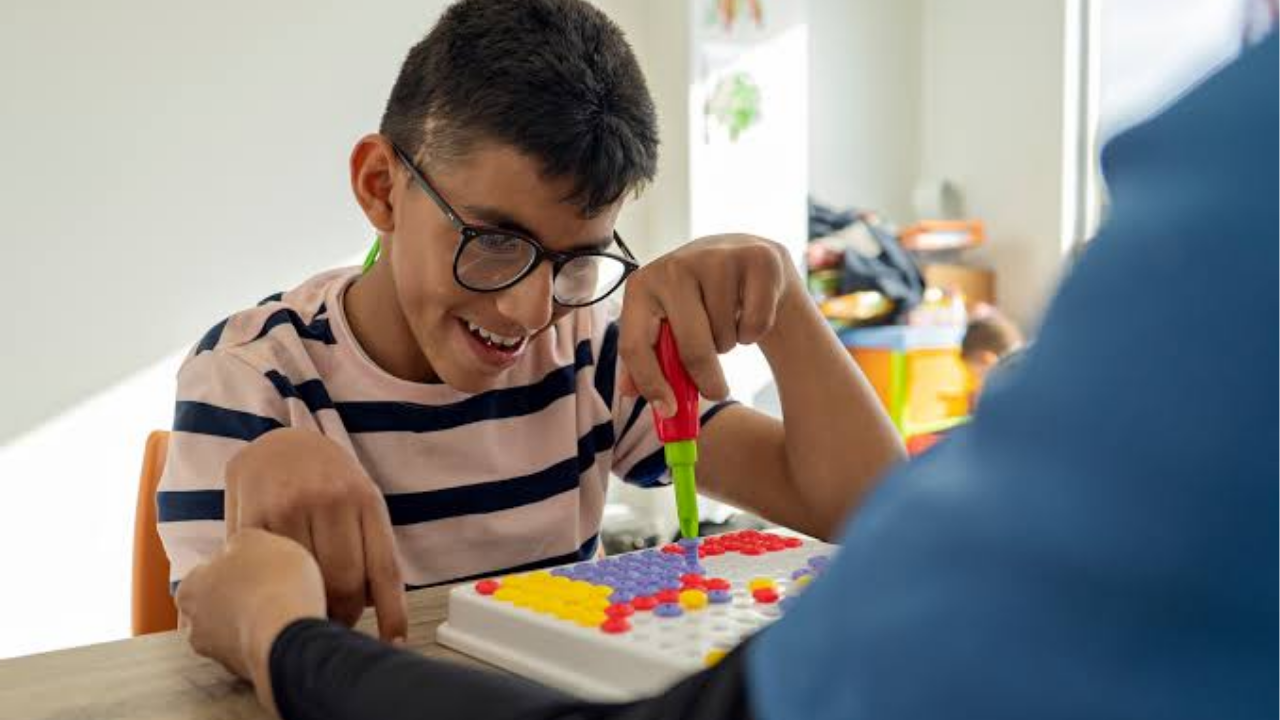
Some children seem unusually sensitive to sounds, lights, textures, smells, movement, or touch. Others may constantly seek movement, have difficulty sitting still, frequently crash into objects, or become overwhelmed in busy environments. These behaviors can sometimes be related to sensory processing difficulties, which may affect how a child responds to information received through their senses.
Sensory challenges can interfere with everyday activities such as eating, dressing, playing, learning, sleeping, and interacting with other people. Occupational therapy can help children develop better ways to process and respond to sensory information while building the skills needed for greater independence.
What Are Sensory Processing Difficulties?
Sensory processing refers to the way the brain receives, organizes, and responds to information from the environment and the body.
A child may be particularly sensitive to certain sensations or may seek more sensory input than other children. For example, some children may cover their ears because ordinary sounds feel uncomfortable, while others may constantly move, jump, spin, or touch objects.
Sensory processing difficulties can occur alongside conditions such as Autism Spectrum Disorder, ADHD, developmental delays, and certain neurological or developmental conditions. However, sensory-related challenges can vary significantly from child to child.
Common Signs of Sensory Challenges
Parents may notice several different behaviors depending on the child’s individual sensory needs.
A child may dislike certain clothing materials, avoid particular foods because of their texture, become distressed by loud noises, dislike haircuts or nail trimming, avoid playground equipment, or become overwhelmed in crowded environments.
Other children may constantly seek movement, enjoy spinning, jump frequently, touch everything around them, or have difficulty remaining seated during activities.
These behaviors should be understood within the child’s overall developmental and behavioral profile rather than viewed simply as misbehavior.
How Occupational Therapy Can Help
Pediatric occupational therapy focuses on helping children participate more successfully in everyday activities.
After assessing the child’s individual sensory, motor, behavioral, and functional needs, an occupational therapist can develop an individualized intervention program. Therapy may include structured sensory activities, movement-based exercises, fine motor activities, coordination exercises, and practical activities related to daily routines.
The objective is to help children respond more effectively to sensory information so they can participate in activities with greater comfort and independence.
Improving Attention and Participation
Sensory difficulties can sometimes make it challenging for children to concentrate during learning or therapy activities.
Occupational therapy may incorporate activities that support body awareness, coordination, regulation, and attention. These skills can help children participate more effectively in classroom activities, structured play, and everyday routines.
The specific activities used depend on the child’s assessment and individual goals.
Supporting Daily Living Skills
Occupational therapy is not limited to sensory activities. It can also help children develop practical skills needed for everyday independence.
Therapy may target activities such as feeding, dressing, handwriting, using utensils, grooming, organizing belongings, and participating in age-appropriate household or school routines.
By breaking difficult activities into manageable steps, therapists can help children gradually develop greater confidence and independence.
Occupational Therapy and Autism
Sensory processing differences are common among many children with Autism Spectrum Disorder. A child may experience difficulties with sounds, textures, movement, visual stimulation, or changes in their surroundings.
For autistic children, occupational therapy can form part of a broader individualized intervention program. Depending on the child’s needs, it may be combined with ABA Therapy, Speech Therapy, Behavior Therapy, Child Psychology, and Special Education.
A coordinated approach allows different developmental needs to be addressed rather than focusing on only one area.
Parents Play an Important Role
Therapy does not stop when a child leaves the clinic. Parents can support progress by creating predictable routines, understanding their child’s sensory preferences, and using therapist-recommended strategies during everyday activities.
Consistent communication between parents and therapists also helps ensure that therapy goals remain practical and relevant to the child’s life.
When Should Parents Seek an Assessment?
If sensory-related behaviors are regularly interfering with your child’s eating, sleeping, dressing, learning, playing, communication, or participation in family activities, a professional developmental assessment may be helpful.
An assessment can identify the child’s strengths and challenges and determine whether occupational therapy or other developmental services may be appropriate.
Early support can give children more opportunities to develop functional skills and confidence during important stages of development.
Helping Children Participate More Confidently
Every child experiences the world differently. Understanding their sensory needs can help parents and professionals create environments where children feel more comfortable and are better able to learn and participate.
With individualized occupational therapy and appropriate developmental support, children can work toward improved coordination, independence, participation, and everyday functioning.
Dr Zia Speech ABA Behavior Autism Therapies
For children experiencing sensory processing difficulties, developmental delays, autism, ADHD, communication difficulties, or behavioral challenges, professional assessment can help identify appropriate support.
Dr Zia Speech ABA Behavior Autism Therapies
Address: Dr Z Pain & Brain, Raja Market, Street 48, F-11/3, Islamabad
Phone: 0330 4343123
The center provides Occupational Therapy, ABA Therapy, Speech Therapy, Behavior Therapy, Child Psychology, Autism Assessment, Special Education, and Parent Counseling with individualized programs based on each child’s developmental needs.
Additional Rehabilitation Location
Spire Medical & Rehabilitation Center
Address: 5, Block F, Media Town, Islamabad
Phone: 0330 2592597
Neuro-Rehabilitation Location
Theramed Neuro Therapies – DHA 2 Islamabad
Address: Sheikh Zayed Bin Sultan Al Nahyan Road, Downtown Giga, D Sector, DHA Phase II, Islamabad
Theramed provides Speech Therapy, Behavior Therapy, Occupational Therapy, Physiotherapy, Child & Adult Psychological Services, and specialized autism and neuro-rehabilitation programs for children and adults.

